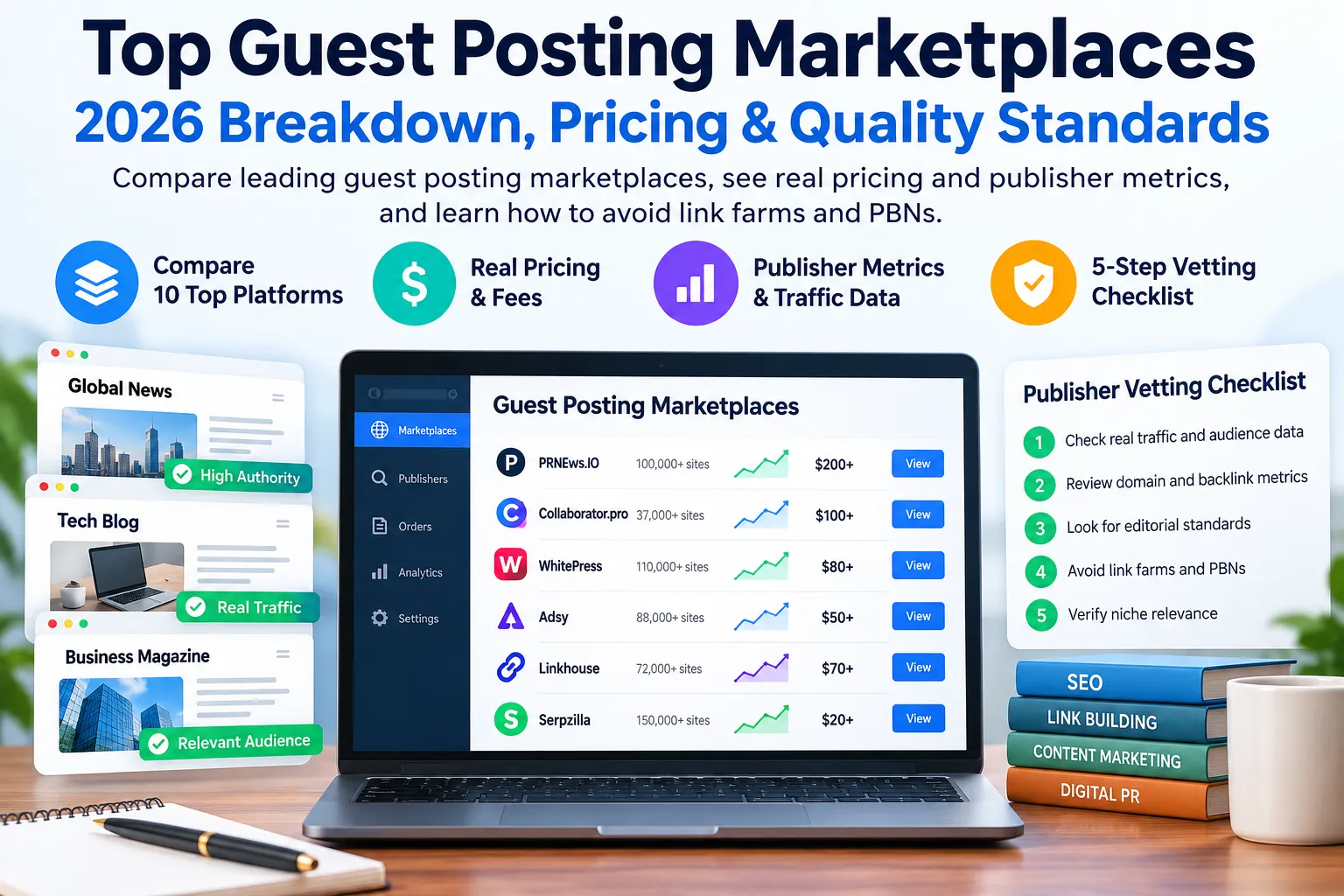
Top Guest Posting Marketplaces (2026 Breakdown, Pricing & Quality Standards)
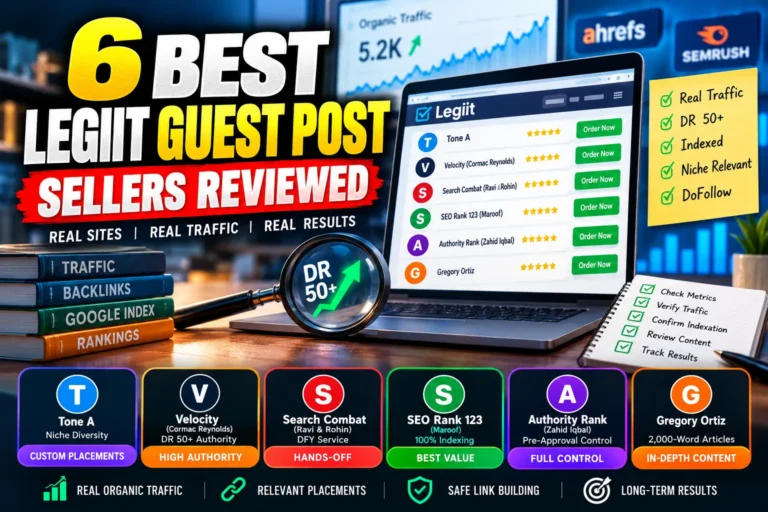
Guest posting marketplaces connect SEO agencies, brands, and marketers with website publishers, so that sponsored content and backlinks can be bought, tracked, and managed in one place. The right platform saves weeks of cold outreach. The wrong one leaves you with links on thin, recycled sites that Google quietly discounts.
This guide exists to help you choose well: how ten leading platforms compare, how their fees really work, where link farms and private blog networks (PBNs) tend to hide, and how to verify a publisher’s traffic before a single dollar leaves your account.
Master Comparison Table
| Marketplace | Best For | Listings | Commission | Metrics Disclosed | Primary Strength |
|---|---|---|---|---|---|
| PRNEWS.IO | Global PR & high-tier media | 100,000+ | ~15% included at checkout | Organic traffic, general traffic, geo-split, traffic trends | Direct access to major global news outlets and press releases |
| Collaborator.pro | Eastern European & global markets | 37,000+ | 10% on deposits + payment system fees | Ahrefs/Moz/Majestic metrics, Google Analytics, traffic by country | Direct publisher chat, verified Google Analytics traffic, high data transparency |
| WhitePress | European & multilingual SEO | 110,000+ | Built into published offer price | Traffic trends, organic search visibility, country breakdown | In-house editorial team, rigorous domain quality control |
| Adsy | Budget to mid-tier link building | 88,000+ | Included in listed publisher price | Organic traffic, general traffic, traffic trends | Large inventory across diverse niche categories |
| Linkhouse | Comprehensive link & content hub | 72,000+ | Included in item price | Ahrefs DR, Senuto, Majestic TF, traffic metrics | Advanced filtering, link insertion tools, competitor backlink gap analysis |
| Serpzilla | Automated & micro-budget links | 150,000+ | Automated per-link model | Domain authority indicators, indexation status | Algorithmic buying; rental and permanent backlink options |
| Getfluence | Premium & enterprise media outlets | 10,000+ | Built into custom quote | Monthly visits, reader demographics, domain metrics | High-tier editorial magazines and mainstream news outlets |
| NO-BS Marketplace | Vetted agency outreach | 10,000+ | Fixed pricing tiers per placement | Publisher DR, organic traffic | High editorial standards, fully managed outreach options |
| Loganix | Fully managed B2B link building | Curated / vetted pool | Fixed package pricing | Manual editorial review, DR, organic search traffic | Zero-footprint placements, enterprise quality control |
| FB Guest Post Service | Managed, manual-outreach guest posts | Catalog size not published on the homepage | Quote-based | Live post URL and anchor text reported for every order | Hand-pitched blogs, human-written articles, client approval before publishing, English and Urdu support |
Detailed Platform Breakdown
A quick note before the profiles. Inventory figures are the ones each platform advertises, and marketplaces revise them often, so treat them as orders of magnitude rather than audited counts. Headquarters details come from public company listings; where they were not clearly published, that is stated plainly rather than guessed.
1. PRNEWS.IO
Headquarters: Tallinn, Estonia, per the company’s own press materials. A late-2025 announcement also described a relocation of its U.S. headquarters to downtown Miami. Inventory size: 100,000+ listings. Business model: Self-serve marketplace. Core strengths and transparency: PRNEWS.IO is the natural stop for anyone chasing recognizable media names or press release distribution. Listings disclose organic traffic, general traffic, a geographic split, and traffic trends, which lets you judge whether a site’s readership actually lives where your customers do. Pricing: Articles typically run $200 to $550+. Publishers set their own prices, and a service fee of roughly 15% is added at checkout, so the number you see is the number you pay.
Website: prnews.io
2. Collaborator.pro
Headquarters: Tallinn, Estonia, according to public company profiles. Inventory size: 37,000+ listings. Business model: Self-serve marketplace. Core strengths and transparency: Collaborator’s calling card is candor. Listings carry Ahrefs, Moz and Majestic metrics alongside Google Analytics data and a traffic-by-country breakdown, and you can speak with publishers directly through built-in chat. It is a particularly sound choice for Eastern European and broader global campaigns. Pricing: The platform takes a 10% commission on deposits, plus whatever fees your payment system levies. Per-article prices are set by each publisher.
Website: collaborator.pro
3. WhitePress
Headquarters: Bielsko-Biała, Poland. Inventory size: 110,000+ listings. Business model: Self-serve with an in-house editorial layer. Core strengths and transparency: WhitePress leans on its own editorial team and a rigorous approach to domain quality, which is a quiet relief when you are buying in languages you do not read. Traffic trends, organic search visibility, and country breakdowns are all disclosed. It is the strongest fit for European and multilingual SEO. Pricing: Its commission is folded into the published offer price, so there is no separate fee to reconcile. Copywriting, if you order it, costs roughly $40 to $130.
Website: whitepress.pl
4. Adsy
Headquarters: Third-party business listings describe Adsy as based in the United States (Delaware). Treat that as a registration detail rather than a statement about where its team sits. Inventory size: 88,000+ listings. Business model: Self-serve marketplace. Core strengths and transparency: Breadth. Adsy’s catalog spans an unusually wide range of niche categories, which makes it handy for budget and mid-tier link building where you need volume without bespoke negotiation. Organic traffic, general traffic, and traffic trends are shown. Pricing: Its fee is included in the publisher’s listed price. Articles generally start around $25 and run to $150+.
Website: adsy.com
5. Linkhouse
Headquarters: Not clearly disclosed in the public sources reviewed for this guide. Inventory size: 72,000+ listings. Business model: Self-serve marketplace. Core strengths and transparency: Linkhouse behaves like a workbench more than a shop window. Advanced filtering, link insertion tools, and competitor backlink gap analysis sit alongside Ahrefs DR, Senuto, Majestic TF, and traffic metrics. Pricing: The fee is included in the item price; individual placement costs depend on the publisher.
Website: linkhouse.net
6. Serpzilla
Headquarters: Not clearly disclosed in the public sources reviewed for this guide. Inventory size: 150,000+ listings, the largest in this comparison. Business model: Automated, self-serve. Core strengths and transparency: Serpzilla is built for algorithmic buying: you set parameters and the system assembles the links. Both rental and permanent backlinks are on offer. Disclosure is thinner than elsewhere, limited to domain authority indicators and indexation status, which is exactly why the vetting framework below matters most here. Pricing: An automated per-link model suited to micro-budgets.
Website: serpzilla.com
7. Getfluence
Headquarters: Toulouse, France, with additional offices reported in Madrid and London. Inventory size: 10,000+ listings. Business model: Premium, quote-driven marketplace. Core strengths and transparency: A deliberately small catalog of high-tier editorial magazines and mainstream news outlets. Monthly visits, reader demographics, and domain metrics are disclosed, so you can weigh an outlet’s audience, not just its authority score. Pricing: Built into a custom quote, which is typical for enterprise-grade media buys.
Website: getfluence.com
8. NO-BS Marketplace
Headquarters: Startup directories place the company in Geelong, Australia. Inventory size: 10,000+ listings. Business model: Marketplace with fully managed outreach options. Core strengths and transparency: Editorial standards are the draw, together with the option to hand outreach to a team. Publisher DR and organic traffic are shown for each site. Pricing: Fixed pricing tiers per placement, which makes budgeting refreshingly predictable.
Website: nobsmarketplace.com
9. Loganix
Headquarters: The company describes itself as an entirely remote team operating since 2010; a single headquarters is not prominently published. Inventory size: A curated, vetted pool rather than an open catalog. Business model: Fully managed. Core strengths and transparency: Every placement passes manual editorial review, with DR and organic search traffic checked. The emphasis is on zero-footprint placements and enterprise-level quality control, which suits B2B brands that cannot afford a stray link on a questionable site. Pricing: Fixed package pricing.
Website: loganix.com
10. FB Guest Post Service
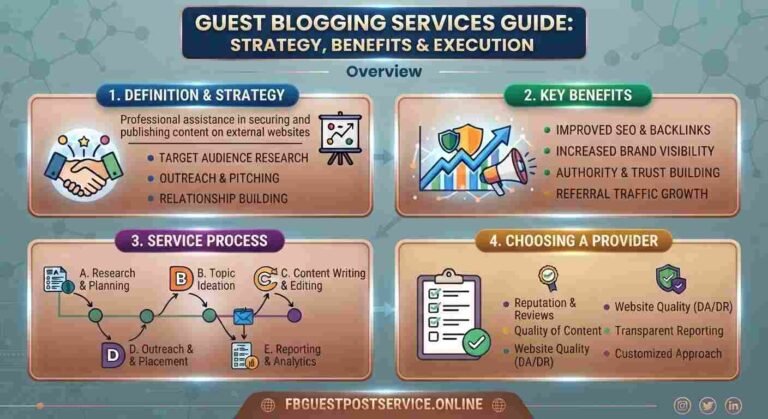
Headquarters: Multan, Pakistan, serving clients in Pakistan, the USA, the UK, and elsewhere. Inventory size: The homepage does not state a catalog count; a separate marketplace page is linked from the site. Business model: Managed. The team pitches blog owners by hand, writes the article, publishes it on a relevant site, and sends back the live link. Nothing goes live without the client’s approval. Core strengths and transparency: Every order ends with the published URL and the anchor text used, so the placement can be checked by anyone. Services cover guest post publishing, do-follow contextual backlinks, link building, SEO content writing, blogger outreach, and white-label orders for agencies. Niches include technology, SaaS, digital marketing, business, ecommerce, finance, health, travel, fashion, education, lifestyle, and real estate. Support is offered in English and Urdu. Pricing: Quote-based. Prospective clients send their website, niche, and target keyword, and receive next steps and a price in reply.
Website: fbguestpostservice.online
Marketplace Business Models Compared
Behind the logos, nearly every platform on this list falls into one of two camps. Understanding which you are buying into matters more than any individual feature.
Self-Serve Marketplaces
Collaborator, WhitePress, and Adsy exemplify the model: you browse, filter, choose, and pay.
Pros:
- Lower cost, generally $30 to $300 per placement.
- Direct control over which sites, anchors, and target pages you use.
- Vast inventory across languages and niches.
Cons:
- Vetting is entirely your responsibility.
- Open catalogs inevitably attract low-quality link farms alongside genuine publishers.
Managed Link Agencies
Loganix and NO-BS Marketplace’s managed options take the opposite stance: you describe the goal, and they deliver placements.
Pros:
- Turnkey service from brief to live link.
- A pre-vetted publisher pool.
- Replacement guarantees if a link disappears.
Cons:
- Higher cost per link, typically $200 to $800+.
- Less hands-on control over exact placements.
A useful rule of thumb: if you have the time and the discipline to audit publishers yourself, self-serve stretches a budget furthest. If your time is the scarcer resource, or your brand cannot tolerate a bad neighbourhood, paying the managed premium is rational.
The 5-Step Publisher Vetting Framework
Whichever platform you choose, a catalog listing is an advertisement, not a verdict. Run every candidate site through these five checks before you pay.
1. Inspect organic search traffic trends. Open the site in Ahrefs or Semrush and look at twelve months of organic traffic. You want stability or steady growth, not a cliff, and not a suspicious spike. Disregard inflated DA or DR on their own; those scores can be manipulated, and traffic is far harder to fake.
2. Verify geographic audience alignment. Check where the traffic originates. A site with impressive numbers drawn mostly from countries you cannot sell to will do little for your business, however pleasing its metrics look.
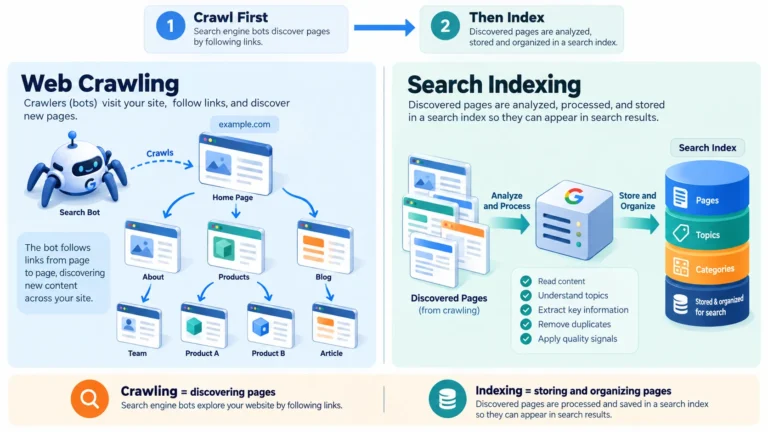
3. Check outbound link ratios and Google indexation. Search site:domain.com in Google to confirm the domain is indexed and see what it publishes. Walk away from sites that churn out daily casino or crypto posts, or whose pages carry a conspicuous number of outbound links.
4. Review editorial and content quality. Look for real authors with real histories, evidence of reader engagement, and writing that a person plainly cared about. Low-effort, machine-spun filler is a warning sign that the site exists to sell links.
5. Audit the publisher’s backlink profile. Examine who links to the site. Domains propped up by PBNs or by swathes of spammy directory links carry risk that can travel down to your own pages.
Serpzilla and Adsy, with their enormous inventories and lighter disclosure, reward this checklist most. Even the best-curated platforms benefit from it, because the cost of a single poor placement dwarfs the minutes spent checking.
Frequently Asked Questions
What is a guest posting marketplace?
It is a platform that connects buyers (agencies, brands, marketers) with website publishers, so that sponsored articles and backlinks can be ordered, paid for, and tracked in a single interface.
How do marketplaces make money?
Through commissions. PRNEWS.IO adds roughly 15% at checkout; Collaborator.pro charges 10% on deposits plus payment system fees; WhitePress, Adsy, and Linkhouse build their fees into the listed price; and managed providers such as NO-BS Marketplace and Loganix charge fixed tiers or packages.
How much does a guest post cost?
It varies enormously. Self-serve placements commonly fall between $30 and $300, with examples such as Adsy articles from about $25 and PRNEWS.IO placements from $200 to $550+. Managed link building often costs $200 to $800+ per link. WhitePress copywriting alone runs about $40 to $130.
Which marketplace is best for premium media?
Getfluence and PRNEWS.IO are the strongest options for high-tier editorial and major news outlets. WhitePress is the better choice for European, multilingual campaigns.
Self-serve or managed: which should I choose?
Choose self-serve if you want control and lower costs and can vet publishers yourself. Choose managed if you value a pre-vetted pool, replacement guarantees, and saved time, and can accept a higher price per link.
How do I avoid link farms and PBNs?
Apply the five-step framework above: inspect twelve-month organic traffic, confirm audience geography, check indexation and outbound links, judge editorial quality, and audit the backlink profile. If a site fails any of them, move on.
Are DA and DR scores reliable?
Only in moderation. They are useful screening signals but can be manipulated, so always corroborate them with real organic traffic data from a tool such as Ahrefs or Semrush.

Faisal Bhatti is the founder of FBguestpostservice.online, a specialized link building and digital PR outreach agency helping businesses, SEO agencies, and content creators grow their organic search visibility. With hands-on experience in white-hat backlink acquisition, editorial content placement, and authority-building outreach campaigns, Faisal Bhatti has helped clients across a wide range of niches — including technology & SaaS, business & finance, health & wellness, travel & tourism, lifestyle & fashion, education & e-learning, real estate, legal, home improvement, automotive, food & beverage, beauty & cosmetics, sports & fitness, gaming & entertainment, parenting & family, marketing & advertising, e-commerce & retail, crypto & blockchain, and B2B/SaaS industries — secure high-quality, contextually relevant backlinks that drive real, sustainable ranking growth. He is passionate about delivering genuine, quality-first SEO solutions rather than shortcuts, and continues to expand the FB Guest Post Service suite with practical, results-focused SEO tools.